Robotics · 20 November 2026 · 4 min read
Skylark Labs Demonstrates Autonomous Humanoid Robot Performing Explosive-Hazard Search
Using Continual Field-Adaptive Models (CFAM), the defense AI startup turned handheld detector audio beeps into closed-loop robotic navigation, though physical disposal remains unsolved.
Lede & Nut Graf
Defense artificial intelligence (AI) startup Skylark Labs demonstrated a humanoid robot autonomously sweeping outdoor ground for explosive hazards on November 20, 2026, using standard-issue handheld explosive ordnance disposal (EOD) detectors (Breaking Defense, Nov. 20, 2026). Rather than relying on a human operator to joystick every movement, the system converts the detector’s audio beeps and visual cues directly into closed-loop navigation actions.
The demonstration highlights a pragmatic defense use case for humanoid form factors: operating legacy, human-designed military equipment in high-risk environments without requiring armed forces to procure entirely new sensor suites.
Technical & Financial Breakdown
Skylark’s demonstration relies on its Continual Field-Adaptive Models (CFAM), an architecture designed to let robots adapt to shifting field conditions after leaving the lab without catastrophic forgetting. In real-world robot evaluations reported by the company, CFAM achieved roughly 30% higher task success than a standard baseline model and matched standard performance using just 40% of the training data.
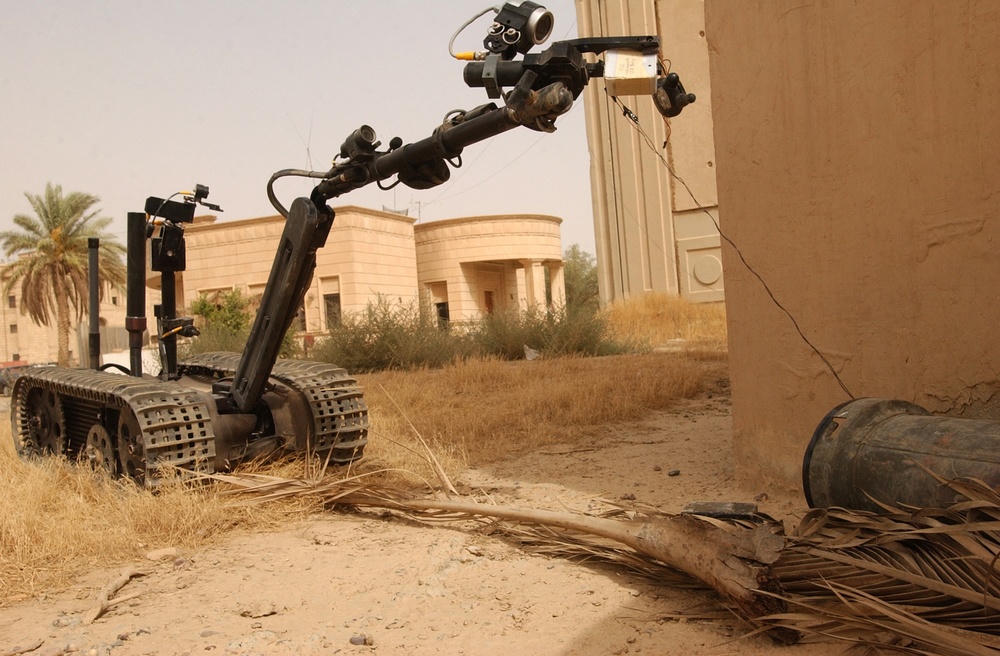
Historically, military EOD units have relied on teleoperated tracked vehicles—such as the 170 L3Harris T7 systems fielded by the US Air Force starting in 2022—which demand continuous one-to-one human control. Skylark’s stated operational concept uses autonomous humanoids to divide a search grid and hand off findings while a single human specialist supervises from a safe distance.
Second-Order Implications
With Action on Armed Violence recording 10,376 improvised explosive device (IED) incidents across 94 countries between 2015 and 2024, Pentagon and allied defense buyers have strong incentives to fund autonomous "first-footstep" reconnaissance. If field-adaptive models can reliably ingest multimodal cues—like audio tone shifts from standard detectors—defense robotics procurement could shift from bespoke tracked platforms toward software-defined humanoid fleets.
Caveats & Open Questions
The Breaking Defense report is a company-sponsored post, and Skylark explicitly noted that the demonstrated capability is limited to detection support; physical handling and explosive disposal remain future development goals. The company did not disclose the underlying humanoid hardware vendor, battery endurance on uneven outdoor terrain, or performance metrics under electronic warfare or heavy acoustic interference ``.
More in Robotics
- NVIDIA Physical AI Revenue Nearly Triples YoY, Pacing for $25 Billion in FY27 as Fab and AMR Deployments Scale
- BlackBerry QNX Targets Physical AI Robotics Growth as NVIDIA Standardizes on QNX for Halos Safety Stack
- Texas A&M Opens $200 Million Space Institute Near NASA JSC With Lunar and Martian Robotics Testbeds