Robotics · 22 November 2026 · 4 min read
NVIDIA Physical AI Revenue Nearly Triples YoY, Pacing for $25 Billion in FY27 as Fab and AMR Deployments Scale
Interim CEO Colette Kress confirmed Physical AI revenue nearly tripled in Q3 as GlobalFoundries preps early-2027 humanoid fab pilots and Rockwell Automation acquires swarm-AMR maker AGILOX.
Lede & Nut Graf
NVIDIA Corporation’s Physical AI business nearly tripled year over year in its third fiscal quarter and is now pacing to reach $25 billion in fiscal year 2027 revenue, according to disclosures from interim Chief Executive Officer Colette Kress (Constellation Research, Nov. 22, 2026). The milestone arrives alongside concrete industrial deployments—from GlobalFoundries introducing quadruped and humanoid robots inside semiconductor fabs to Rockwell Automation’s acquisition of Austrian autonomous mobile robot (AMR) maker AGILOX (MLQ.ai, Nov. 2026).
While Wall Street remains focused on hyperscale graphics processing unit (GPU) cycles and regulatory inquiries, a $25 billion annual run rate confirms that embodied artificial intelligence (AI) has become a material revenue pillar rather than a distant research bet.
Technical & Financial Breakdown
NVIDIA’s Physical AI stack monetizes three layers simultaneously: cloud simulation and synthetic data generation (Omniverse and Cosmos), robot foundation models (GR00T), and onboard edge compute (Jetson Thor humanoid reference designs). By standardizing the simulation-to-edge pipeline, NVIDIA captures both upfront training-cluster capital expenditure (CapEx) and recurring per-unit edge silicon sales.
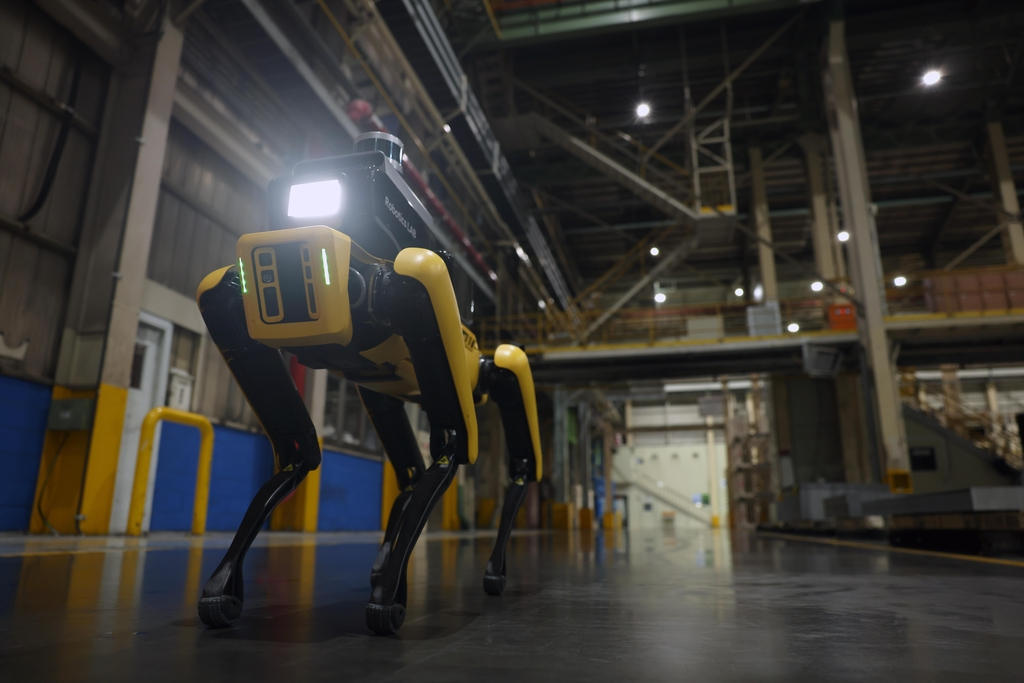
Downstream industrial buyers are validating the hardware shift. Semiconductor foundry GlobalFoundries is expanding deployments of Boston Dynamics’ Spot quadruped for predictive equipment maintenance inside its fabs and plans to begin piloting Boston Dynamics’ Atlas humanoid robots in early 2027 (Constellation Research, Nov. 22, 2026). Meanwhile, industrial automation incumbent Rockwell Automation agreed to acquire AGILOX—a 250-plus-employee Austrian developer of decentralized swarm AMRs that has quadrupled revenue since 2021—to more than double Rockwell’s mobile robotics footprint.
Second-Order Implications
GlobalFoundries’ decision to put quadrupeds and humanoids inside live semiconductor fabs is a major credibility marker for Physical AI. Cleanroom fabs demand extreme reliability, tight electromagnetic tolerances, and zero tolerance for unplanned tool downtime—meaning robotics vendors that clear fab qualification can rapidly scale across aerospace, electronics, and automotive plants.
For legacy industrial automation giants like Rockwell, acquiring proven swarm-AMR specialists like AGILOX reflects an urgent realization: traditional fixed conveyor belts and caged robotic arms are losing factory CapEx share to software-defined mobile fleets.
Caveats & Open Questions
NVIDIA’s $25 billion Physical AI figure bundles automotive, industrial simulation, and edge robotics revenue rather than breaking out standalone humanoid silicon shipments. Furthermore, GlobalFoundries’ early-2027 Atlas initiative remains a pilot rather than a confirmed multi-hundred-unit production rollout.
More in Robotics