Robotics · 20 November 2026 · 4 min read
General Motors Plans 20% North American Robotics Expansion by 2028 as Factory Costs Climb
Facing higher union labor costs and reshoring pressure, GM is building proprietary robotics in-house while requiring Tier 1 parts suppliers to submit automation roadmaps for new bids.
Lede & Nut Graf
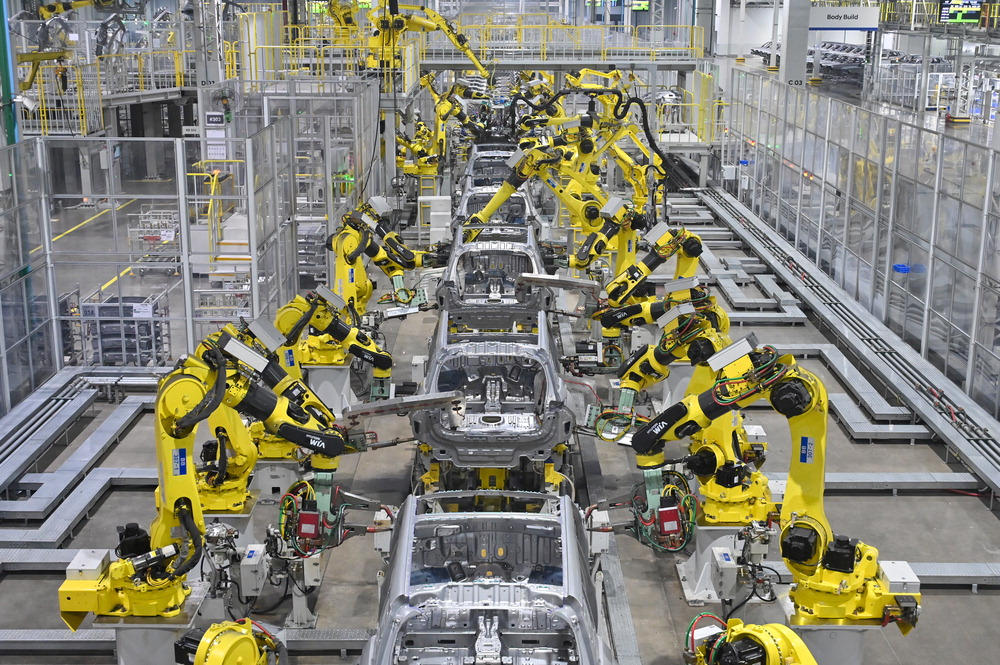
General Motors Co. (NYSE: GM) is preparing to expand automation and industrial robotics across its North American manufacturing footprint by roughly 20% by 2028, according to reports published November 18–19, 2026 (Autoblog, Nov. 18, 2026; Economic Times Auto; International Finance, Nov. 19, 2026). The automaker is pairing external equipment purchases with an internal robotics engineering push while pressuring its supply base to automate in lockstep.
The move illustrates how Physical AI and industrial automation are shifting from experimental pilots to balance-sheet necessities in US manufacturing. Squeezed by domestic reshoring costs, skilled-labor shortages, and rising wages, legacy automakers are aggressively engineering labor hours out of every vehicle assembled.
Technical & Financial Breakdown
GM’s strategy operates on three parallel tracks. First, the automaker continues purchasing conventional industrial robotics from third-party vendors to retrofit existing assembly lines. Second, GM is building proprietary robotics systems in-house in Indiana, backed by a dedicated group of roughly 100 roboticists, artificial intelligence (AI) engineers, and hardware specialists first outlined last year (Economic Times Auto, Nov. 19, 2026; Autoblog, Nov. 18, 2026).
Third, GM is extending its automation mandate down its supply chain. Parts suppliers bidding on new GM vehicle programs must now submit formal automation plans for their own factories, which GM evaluates using an internal scorecard when awarding contracts (Economic Times Auto, Nov. 19, 2026).
The financial driver is straightforward: GM previously estimated that its 2023 United Auto Workers (UAW) labor agreement would add approximately $575 in labor costs per vehicle (compared with $900 per vehicle estimated by Ford Motor Co.). Management expects to outline specific cost-saving targets from the robotics rollout when it releases its 2027 financial guidance (International Finance, Nov. 19, 2026).
Second-Order Implications
Using procurement scorecards to enforce supplier automation creates a massive downstream demand wave for industrial robotics integrators, machine-vision vendors, and edge-AI software providers across the US Midwest. Smaller Tier 2 and Tier 3 automotive suppliers that lack capital expenditure (CapEx) capacity to automate risk losing volume to larger, automated competitors.
At the same time, accelerating plant-floor automation directly ahead of the 2028 UAW contract expiration guarantees that job-security protections and AI-displacement clauses will dominate Detroit’s next labor bargaining cycle.
Caveats & Open Questions
GM has not disclosed the total CapEx budget required to achieve a 20% automation lift, nor has it specified how much of the expansion relies on traditional fixed robotic arms versus newer autonomous mobile robots or embodied AI platforms ``. Pushing too aggressively without union alignment risks work stoppages in 2028 that could rapidly erase multi-year automation savings.
More in Robotics
- NVIDIA Physical AI Revenue Nearly Triples YoY, Pacing for $25 Billion in FY27 as Fab and AMR Deployments Scale
- BlackBerry QNX Targets Physical AI Robotics Growth as NVIDIA Standardizes on QNX for Halos Safety Stack
- Texas A&M Opens $200 Million Space Institute Near NASA JSC With Lunar and Martian Robotics Testbeds