
AI · 23 November 2026 · 4 min read
Enterprise AI Deployments Pivot From Static Benchmarks to Full-Workflow Latency and KV-Cache Memory Efficiency
As corporate deployments move from single-turn chatbots to multi-step autonomous agents, key-value cache expansion and interconnect overhead are replacing benchmark accuracy as the primary engineering bottlenecks.
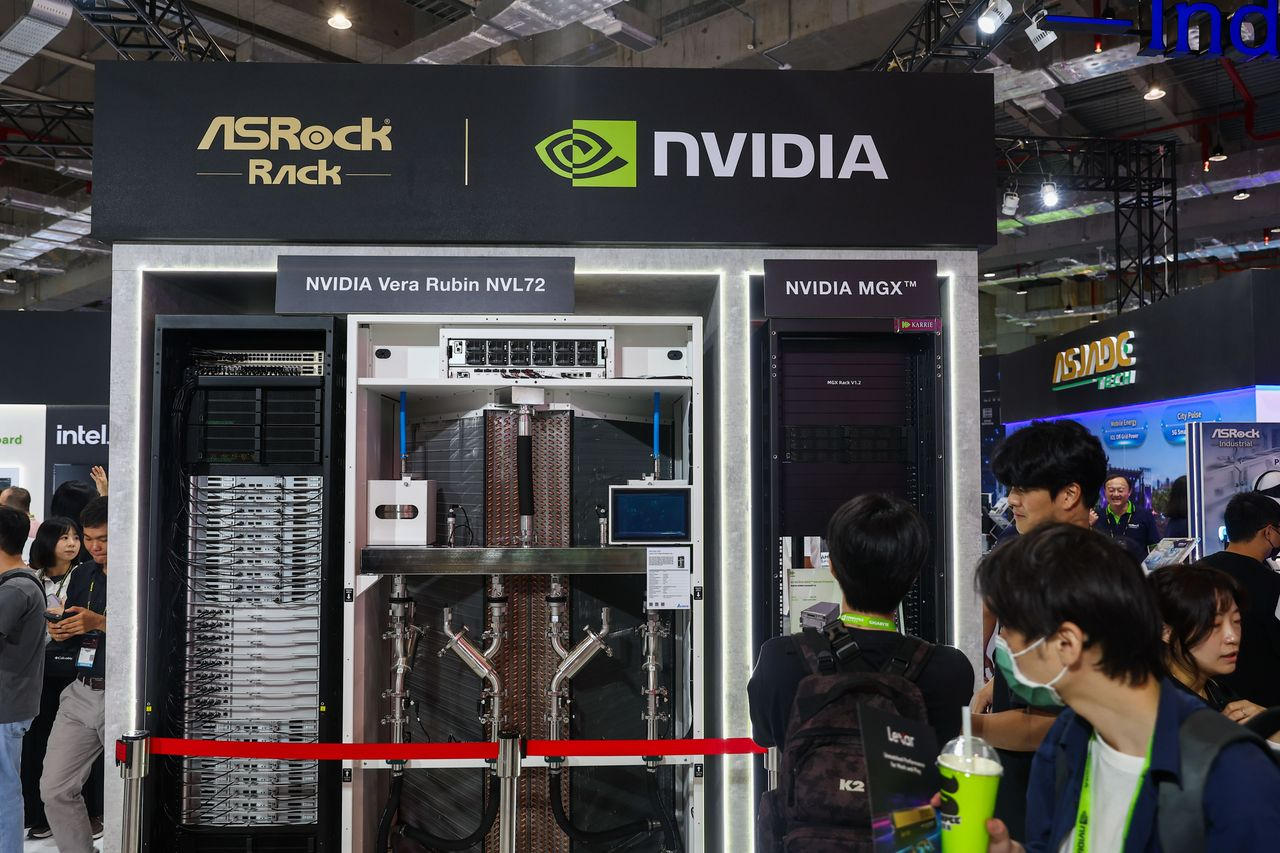
Enterprise artificial intelligence (AI) infrastructure teams are moving decisively away from public leaderboard rankings to evaluate models on end-to-end workflow latency, memory efficiency, and failure recovery (AI World Congress London Editorial, Nov. 6, 2026). Because production agents execute multi-step retrieval, permission validation, and external tool calls, raw single-pass generation speed no longer predicts operational reliability or total serving cost.
For cloud providers and accelerator vendors, this shift elevates memory capacity, interconnect bandwidth, and serving-engine software above peak theoretical floating-point operations per second (FLOPS).
Technical & Financial Breakdown
In live enterprise environments, a single user request routinely triggers multiple sequential model calls interspersed with database queries, identity-and-access-management (IAM) checks, and structured output verification. Each additional reasoning turn and retrieved document expands the active context window, causing key-value (KV) cache memory consumption to grow sharply as user concurrency rises.
When KV-cache footprints exceed single-accelerator high-bandwidth memory (HBM) limits, operators must shard workloads across multiple graphics processing units (GPUs). However, if tensor-parallel or pipeline-parallel sharding configurations are poorly matched to actual prompt-versus-output token lengths, inter-GPU communication overhead erodes utilization and drives up cost per completed task. Enterprise architects are increasingly evaluating "price per task" rather than headline price per million tokens, noting that a higher-priced model finishing a workflow in half the turns can undercut cheaper alternatives on total operating expenditure (OpEx) (BeevR, Nov. 13, 2026).
Second-Order Implications
This architectural reality favors hardware platforms with high memory-to-compute ratios and ultra-fast rack-scale interconnects, while creating a durable market for inference-optimization software, context caching, and disaggregated prefill-decode serving. For proprietary model labs, exposing low-cost cached input tiers—such as Google’s $0.15 per million cached input tokens on Gemini 4 Neon—has become essential to retaining high-concurrency agent traffic.
Caveats & Open Questions
Enterprise inference efficiency varies dramatically by vertical workload, making universal hardware sizing rules unreliable. Specific median-versus-p99 latency overhead figures and exact KV-cache memory-to-cost curves across competing serving engines were not quantified in the editorial analysis .
More in AI
- CrowdStrike Agrees to Acquire Zscaler in $43.9 Billion All-Stock Deal to Form $10 Billion-Plus Security Platform
- UK Financial Conduct Authority Warns Firms That Autonomous AI Agents Fall Under Statutory Financial Regulation
- Intel Stock Surges 16.3% as CEO Lip-Bu Tan Confirms External 18A-P Foundry Customer and 70% 18A Yields