
AI · 24 November 2026 · 5 min read
Intel Stock Surges 16.3% as CEO Lip-Bu Tan Confirms External 18A-P Foundry Customer and 70% 18A Yields
With 18A yields hitting 70% and Microsoft signing on for EMIB advanced packaging, Intel’s domestic foundry pitch is gaining commercial proof points—though external wafer volumes remain undisclosed.
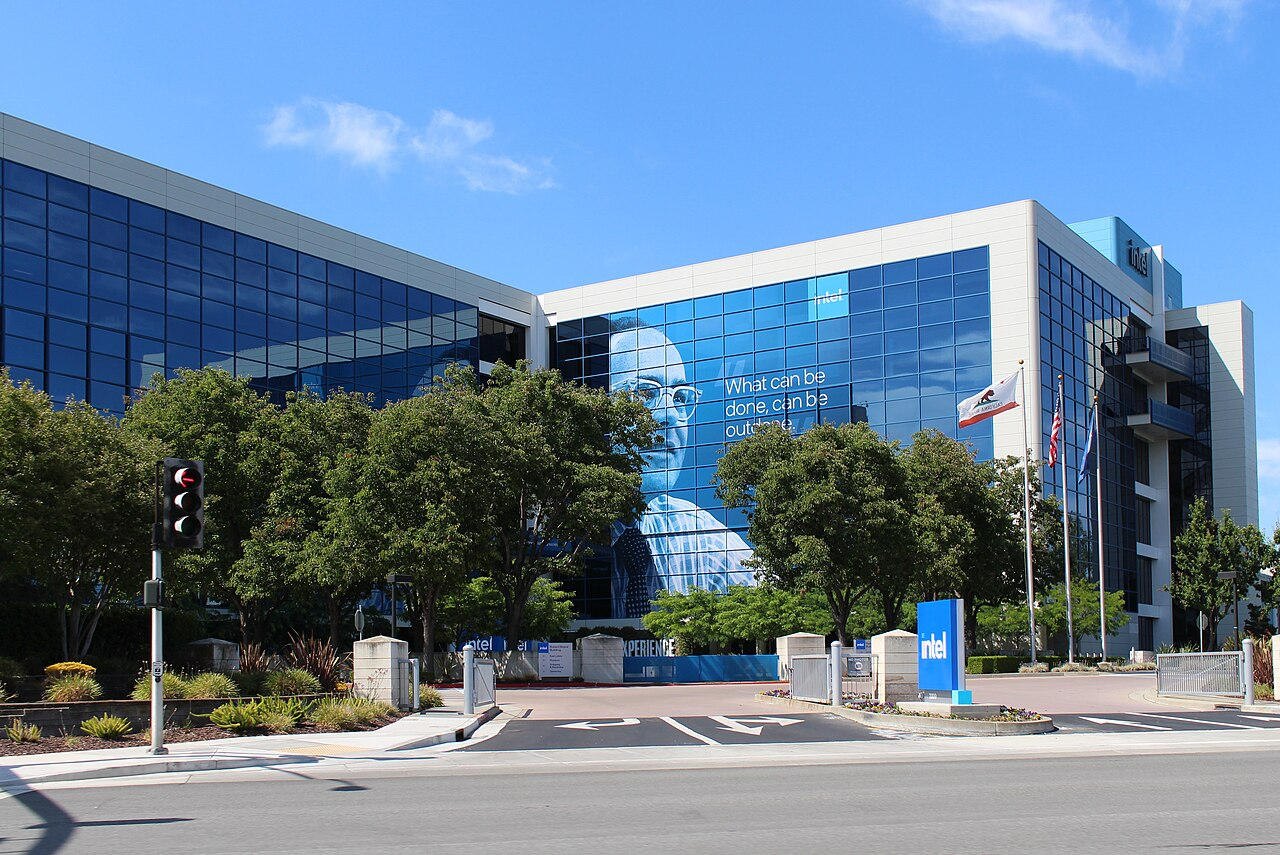
Intel Corporation (NASDAQ: INTC) shares jumped 16.3% to $59.66 on Monday, November 23, 2026, riding a broader semiconductor rebound amplified by Chief Executive Officer Lip-Bu Tan’s confirmation that Intel Foundry has landed an external customer for its 18A-P manufacturing node (BigGo Finance, Nov. 23, 2026; TechPowerUp, Nov. 22, 2026).
Combined with Tan’s disclosure that yields on Intel’s baseline 18A process have reached 70% and Microsoft’s public commitment to Intel’s Embedded Multi-die Interconnect Bridge (EMIB) advanced packaging technology, the updates deliver the clearest operational validation yet of Intel’s attempt to build a viable US alternative to Taiwan Semiconductor Manufacturing Co. (TSMC) (Tom’s Hardware, Nov. 19, 2026).
Technical & Financial Breakdown
Intel’s 18A-P node—a performance-enhanced derivative of its RibbonFET gate-all-around (GAA) and PowerVia backside power-delivery 18A process—has been in risk production since June 2026, maintains design-rule compatibility with 18A, and is slated to manufacture Intel’s upcoming Nova Lake central processing units (CPUs) (TechPowerUp, Nov. 22, 2026).
Key technical and financial figures framing the rally include:
- Yield Inflection: Reaching 70% yield on 18A crosses a critical threshold toward commercial volume economics, directly addressing months of institutional skepticism over Intel’s backside power-delivery manufacturability (Tom’s Hardware, Nov. 19, 2026).
- Microsoft Packaging & Server Tie-In: Microsoft became the first hyperscaler to publicly commit to Intel’s EMIB advanced packaging for custom Azure silicon, paired with a multi-year Xeon server processor supply agreement—offering Intel a lower-risk packaging wedge into hyperscale artificial intelligence (AI) supply chains where TSMC’s CoWoS capacity remains heavily constrained.
- Foundry P&L Reality: While third-quarter Intel Foundry revenue surged 58% to $6.7 billion, the division still recorded an operating loss of $1.85 billion as depreciation from heavy extreme ultraviolet (EUV) lithography capital expenditure (CapEx) continues to weigh on gross margins (BigGo Finance, Nov. 23, 2026).
Second-Order Implications
For US hyperscalers and defense buyers looking to hedge geopolitical and packaging-capacity bottlenecks in Taiwan, Microsoft’s public endorsement of EMIB validates Intel Foundry’s packaging business as an immediate second source even before external fabless giants commit flagship AI accelerators to Intel’s leading-edge wafer nodes. Winning a design-rule-compatible 18A-P customer also improves utilization across Intel’s existing 18A tooling without requiring an entirely new fab capital cycle.
Caveats & Open Questions
Despite the 16.3% equity pop, Intel’s foundry turnaround still lacks transparent external backlog visibility. Management has not disclosed the identity of the external 18A-P customer, the target wafer-start timeline, committed dollar volumes, or what fraction of the $6.7 billion in Q3 foundry revenue came from external third-party customers versus internal Intel Products wafer transfers .
More in AI
- CrowdStrike Agrees to Acquire Zscaler in $43.9 Billion All-Stock Deal to Form $10 Billion-Plus Security Platform
- UK Financial Conduct Authority Warns Firms That Autonomous AI Agents Fall Under Statutory Financial Regulation
- Sierra Raises $1.75 Billion Series F at $30 Billion Valuation After Passing $400 Million in Enterprise AI Agent ARR