
AI · 23 November 2026 · 5 min read
NVIDIA Board Unanimously Reinstates Jensen Huang as CEO After 11-Day Absence, Driving 33% Stock Surge
Less than a week after ruling out his return on the Q3 earnings call, NVIDIA’s board reversed course following input from senior US officials, restoring Colette Kress to full-time CFO.
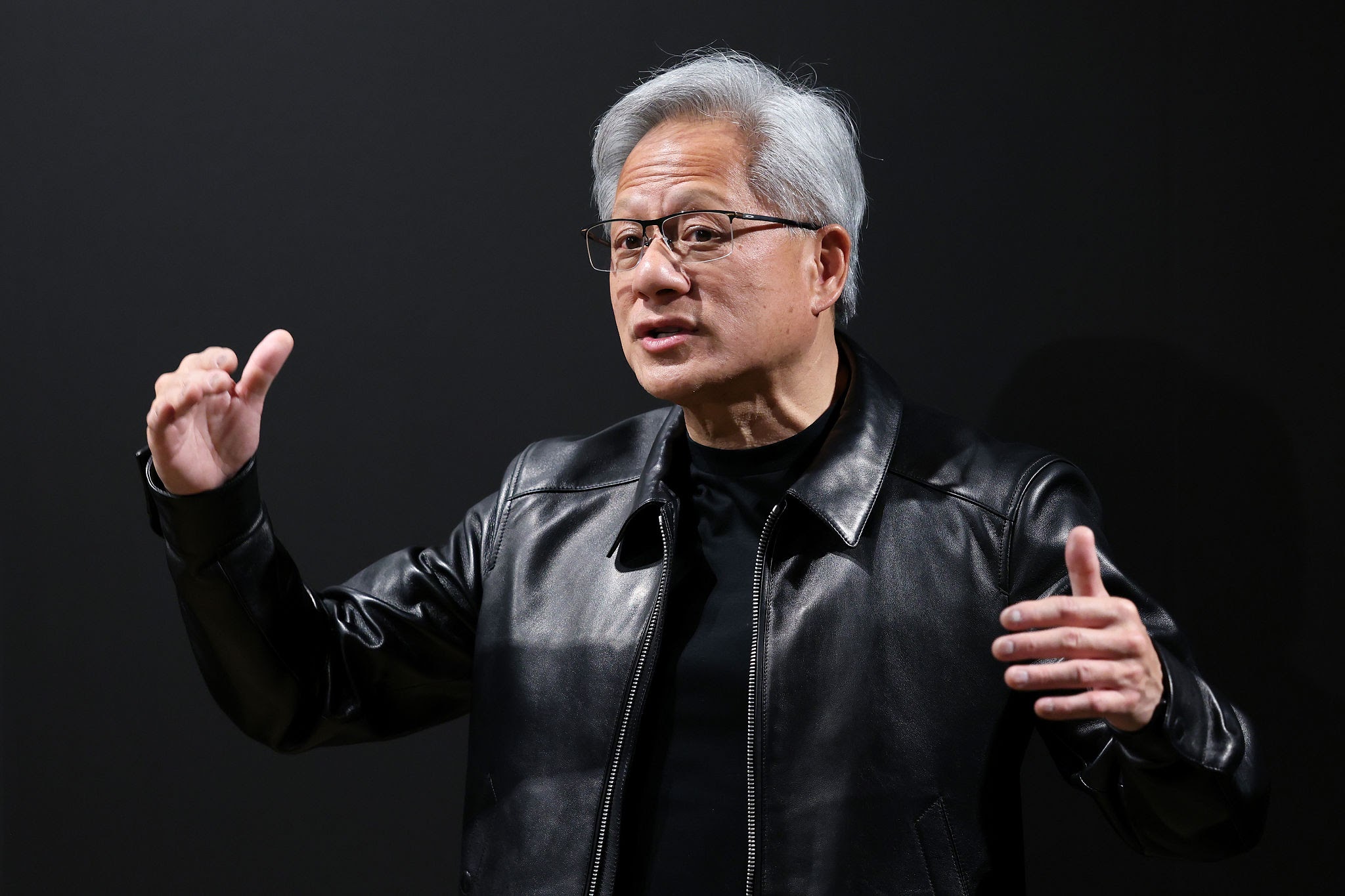
NVIDIA Corporation announced on Monday, November 23, 2026, that its Board of Directors has unanimously voted to reinstate founder Jensen Huang as President, Chief Executive Officer, and board director effective immediately (NVIDIA Form 8-K / Press Release, Nov. 23, 2026). The stunning governance reversal ends an 11-day leadership vacuum triggered by Huang’s November 12 resignation and immediately ignited a 33% opening surge in NVIDIA shares—adding more than $1 trillion in market capitalization in New York trading (Financial Times, Nov. 23, 2026; The Guardian, Nov. 23, 2026).
For the artificial intelligence (AI) infrastructure ecosystem, Huang’s return removes the acute key-man risk that had weighed on neocloud credit markets and semiconductor supply chains since mid-November. Yet the speed of the reversal—coming just six days after board chair Harvey Jones told investors the board did not intend to rehire him—highlights the extraordinary degree to which equity-market pressure and federal executive intervention now shape corporate governance at America’s most strategic chipmaker.
Technical & Financial Breakdown
According to NVIDIA’s Securities and Exchange Commission (SEC) Form 8-K filing, the board formally approved the reinstatement on November 22 following a series of meetings with Huang, concluding it was "satisfied with respect to Mr. Huang’s candor and ability to lead NVIDIA" (NVIDIA Form 8-K, Nov. 23, 2026). Crucially, the filing noted that the board "received input from senior levels of the United States government, and based on that input, the Board is confident that Mr. Huang’s reinstatement poses no national security risk."
The leadership shuffle restores NVIDIA’s prior operational structure while preserving one structural governance change:
- Executive Leadership: Huang resumes full command as President and CEO, ending executive search firm Heidrick & Struggles’ external replacement mandate (INDmoney, Nov. 23, 2026).
- Finance & Governance: Colette Kress concludes her 11-day tenure as interim CEO and continues as Executive Vice President and Chief Financial Officer, a post she has held since 2013, while Harvey Jones remains board chair (Nacionale, Nov. 23, 2026).
- Market Reaction: NVIDIA shares opened 33% higher on Monday morning—if sustained through the close, marking the stock’s largest single-day percentage gain since May 2003—following a roughly 48% peak-to-trough drawdown that had erased approximately $2.7 trillion in value (Financial Times, Nov. 23, 2026).
The turnaround followed intense public lobbying from Silicon Valley founders and investors—including Elon Musk, Gavin Baker, and Travis Kalanick—alongside a petition signed by more than 200,000 people, including NVIDIA employees (Financial Times, Nov. 23, 2026). On Sunday, Treasury Secretary Scott Bessent softened his earlier call for an external leadership shake-up, and President Donald Trump publicly backed Huang’s return on Truth Social, stating the US government had "no reason to believe that Jensen’s return to NVIDIA poses any risk to National Security" and no evidence of unlawful conduct (The Block, Nov. 23, 2026; The Guardian, Nov. 23, 2026).
Second-Order Implications
Huang’s immediate reinstatement stabilizes confidence across NVIDIA’s sprawling hardware and financing ecosystem just as liquid-cooled Vera Rubin NVL72 racks enter volume ramp. Leveraged neocloud operators like CoreWeave—carrying $47 billion in GPU-backed debt—and sovereign AI buyers had faced mounting credit spreads during the leadership vacuum; restoring Huang’s direct oversight calms near-term fears of an abrupt pullback in NVIDIA’s ecosystem partnerships.
At the same time, the episode permanently alters boardroom dynamics in Santa Clara. Having publicly rejected Huang’s offer to return on November 17 only to reverse course unanimously five days later, Harvey Jones and the board now face heightened institutional scrutiny over succession planning and governance independence.
Caveats & Open Questions
Reinstatement by the board and public backing from the White House do not automatically close the parallel legal and legislative inquiries surrounding NVIDIA. Huang and General Counsel Tim Teter are still scheduled to face congressional questioning, and neither the Form 8-K nor Monday’s press release disclosed whether the board imposed new compliance guardrails, executive oversight conditions, or modifications to Huang’s compensation package as terms of his return.
More in AI
- CrowdStrike Agrees to Acquire Zscaler in $43.9 Billion All-Stock Deal to Form $10 Billion-Plus Security Platform
- UK Financial Conduct Authority Warns Firms That Autonomous AI Agents Fall Under Statutory Financial Regulation
- Intel Stock Surges 16.3% as CEO Lip-Bu Tan Confirms External 18A-P Foundry Customer and 70% 18A Yields