Robotics · 28 October 2026 · 4 min read
XPENG says IRON’s battery is in small-batch production. The robot is not
Vice president Gu Jie said on 28 October that a solid-state pack for the humanoid has come off the line in small batches. He also said IRON is still before the start of production. No energy density, capacity, chemistry detail or volume was given.
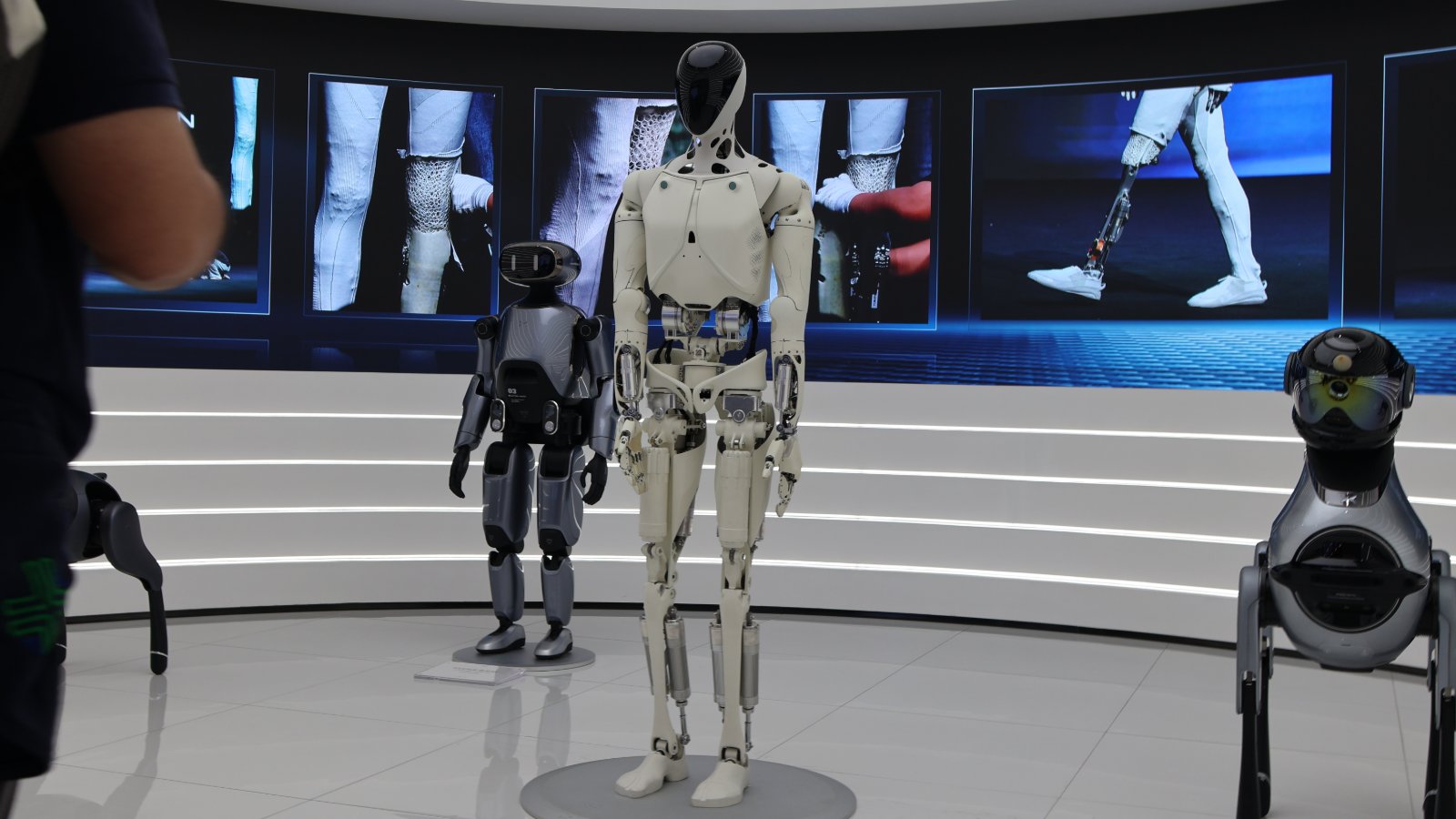
XPENG vice president Gu Jie said on 28 October, at the annual conference of the Society of Automotive Engineers of China, that a solid-state battery for the IRON humanoid has entered small-batch production and come off the line. He also said the robot itself is still before the start of production. The battery is ahead of the machine it is meant to power. A pack on a line is a component. It is not a robot that has started a shift.
What he did describe is the reason for a dedicated pack. Space inside the robot is tight, so the design is meant to hold more energy in less volume than a pack borrowed from a car, and to stop a thermal runaway in one cell from spreading. He said it is built to survive impact and a nail-penetration test. The reports of the speech do not give the energy density, the capacity, the runtime, the cycle life, the supplier, or how many packs have been built. A test named in a speech is not the test record.
The chemistry is the part to keep separate. XPENG has called the pack solid-state, and in November 2025 it said the new IRON would use all-solid-state cells. A September report, from Jipian Lab, said the production robot was instead headed for a solid-liquid hybrid because all-solid cells were not ready for the schedule. Gu’s wording on Wednesday was solid-state. He did not, in the accounts of the speech, say whether the small batch is all-solid or a hybrid, or whether it is the pack that will be in the first machine a customer sees. Until the company publishes the cell, both descriptions are still in the file.
The robot’s own date has not moved. XPENG still says mass production of IRON by the end of 2026, with the first work in its own stores and sites in 2027, and a European rollout in the second half of that year. Those are showroom tasks, not a station on a car line. A battery that can be made in small batches is one less missing part. It does not, by itself, put a finished IRON on a floor.