AI · 13 October 2026 · 5 min read
Unitree’s founder says a robot breakthrough could be one or two years away
Wang Xingxing told a Shanghai roundtable on 12 October that Unitree had tried GPT-6 on its robots and that the results were “very, very good.” He published no measurement. The clock he offered is a fast case, not a plan.
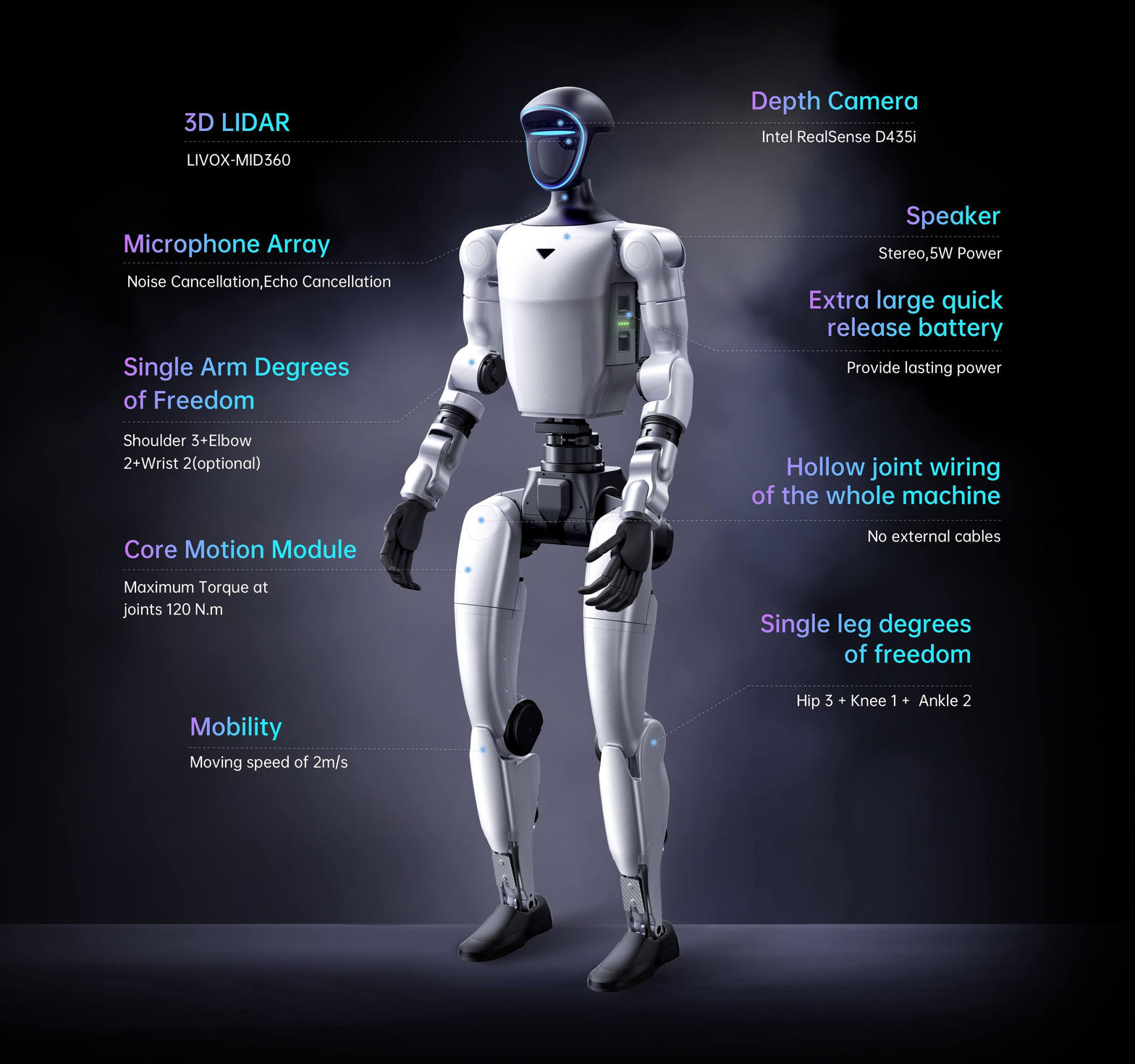
Wang Xingxing, founder and chief executive of Unitree, used the opening of the China International Industry Fair in Shanghai to shorten his own forecast. In a clip published by The Paper, and reported on 12 October by the South China Morning Post and Humanoids Daily, he said Unitree had put GPT-6 onto “all kinds of robots” and tried “all kinds of tasks,” and that “the results were actually very, very good.” He did not name the robots, the tasks, the way the model was connected, or a success rate.
The timeline moved with the adjective. In August, before GPT-6, Wang had put the industry’s “ChatGPT moment” at two or three years in a fast case and as long as a decade in a slow one. On Monday he said that if things move quickly, the tipping point could be one or two years. The South China Morning Post also quoted him floating a more specific possibility: that a GPT-7, released next year, could “directly crack the problems of embodied intelligence.” “Could” is doing all of the work in that sentence. It is not a Unitree product date.
A language model on a robot is not yet a controller
He did not say what GPT-6 was asked to do. A model can label a scene, write a bit of code, or propose the next action. Those are different jobs, and only the last one moves a joint. Humanoids Daily noted that the remarks do not say whether the model planned actions, wrote control code, or sat somewhere else in the stack. “Very, very good” without a count is a founder’s impression after a test. It is not a benchmark, and it is not something another lab can rerun from the clip.
The reason to file it is the change in the clock, not the praise. Unitree ships robots that other people already rent and put in halls. If its founder now thinks a general model might be good enough to run them within two years, that is a claim about the software layer, made by someone who has the hardware. The claim is still his. A fast case of one or two years, and a slow case he used to put at a decade, can both sit on the same slide. He chose, this week, to talk about the fast one.