Robotics · 20 October 2026 · 5 min read
Schaeffler opened a factory where humanoids assemble parts for the next humanoids
Six robots work five stations in a 7,500-square-metre plant in Taicang, building joint modules, including actuators. Schaeffler says incoming orders for the humanoid business are now about €400 million. It does not name the robots, the customers, or a success rate.
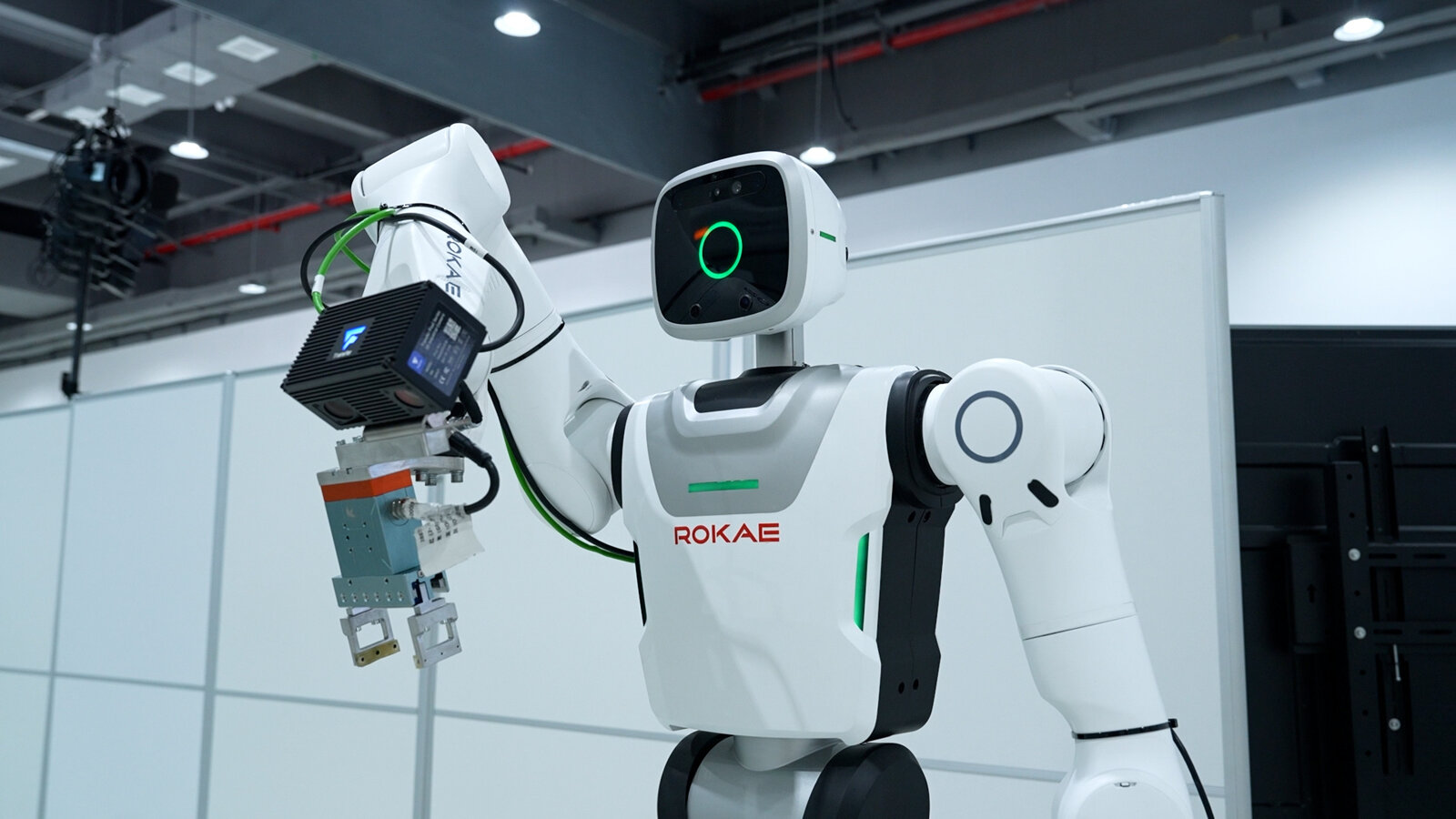
Schaeffler said on 20 October that it has opened a “lighthouse” factory in Taicang, China, for humanoid robotics. The building is about 7,500 square metres. Inside it the company has put an assembly line, a training and data-collection centre, a digital-twin platform and a data centre. The line is for key parts of a humanoid, including linear and rotary actuators. The claim the company wants noticed is the loop: humanoid robots assembling joint modules for the next humanoid robots. Six of them work together at five stations. The release does not say which jobs sit at which station, how long a module takes, or how often a part is rejected.
The commercial number is orders, not sales. Schaeffler says two new customers in Greater China, taken on in the third quarter, took global incoming orders for humanoid robotics to some €400 million. “Some” is the company’s word. Incoming orders are not revenue, and the release does not name the customers, the robots they bought, or the years the orders are spread across. It also does not name the humanoids on its own line. A photograph published with the announcement shows a machine marked ROKAE. That mark is not in the press release.
A line that builds parts is not a line that builds robots
What the factory is equipped to do, on the company’s own description, is narrower than “humanoids making humanoids.” The robots are assembling components: actuators and other joint modules. They are not described as walking a finished humanoid off the end of the line. A supplier that can have its own machines practise the job, and then test the part in the same building, has shortened the loop between a demo and a component. It has not published a count of modules finished in a shift.
The useful fact is the combination of a parts line and a training floor under one roof, plus an order book the company is now willing to put at about €400 million. Both are Schaeffler’s account. Neither is a customer saying a robot finished a counted task, or a named buyer confirming the order. Until one of those exists, Taicang is a factory that has opened, with six humanoids on a parts line and a figure for demand that has not been broken down.