Infrastructure · 21 October 2026 · 5 min read
A robot on peaq can ask a building to open a door. The building in the demo is simulated
peaq has put KETI’s Mobius, a standard way for a building to expose its sensors and doors, onto robotic.sh. The walkthrough is a simulated delivery, not a named site. The door command counts only after the door reports itself open.
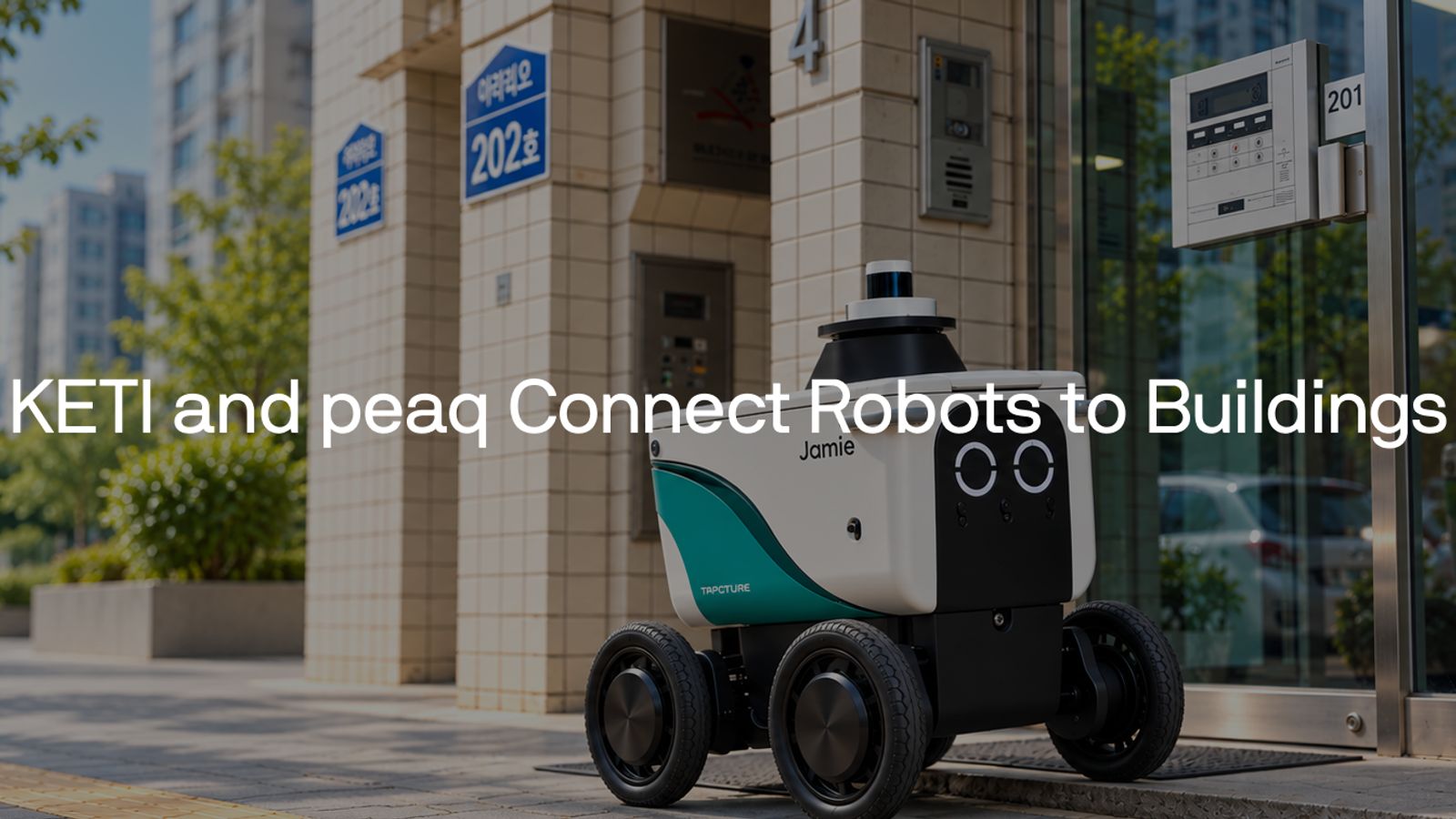
peaq said on 19 October that robots running its software can now talk to a building through Mobius, the open-source platform from the Korea Electronics Technology Institute. Mobius is an implementation of oneM2M, the standard a building’s sensors, doors and gateways already use to report to a server. KETI’s version was the first product certified against Release 2 of that standard. On peaq’s robotic.sh, a machine with a current signed identity can find the devices in a building, read their latest state, subscribe to a change instead of asking again and again, and send a command to open a smart door.
The command is not treated as success when it is sent. peaq says the action counts only once the door acknowledges it and reports itself open. The call goes out under the machine’s own identity. The building’s credentials stay with peaqOS and are not put on the robot. Permissions can be set per machine, so one robot may be allowed to read a sensor and refused the door. The post says no payment runs on this path.
The building it enters has not been named
The demonstration peaq describes is a delivery robot entering a smart building it has not seen before. The company says that walkthrough is simulated. There is no address, no building operator, and no log of a real door. The line “autonomously, on demand, without human intervention” is in the post. The scene that supports it is a demo. A software path that can speak a building standard is a real piece of plumbing. A robot that has used it on a Tuesday in Seoul is not in this announcement.
What would make it infrastructure is a named door. A logistics firm, a hospital or a factory saying a particular machine was let in, and that the acknowledgement was the record they kept. Until then the integration is a service on robotic.sh, with the right shape: identity on the machine, credentials off it, and a result that is the door’s report rather than the request. The first customer is the missing sentence.
More in Infrastructure