Infrastructure · 16 November 2026 · 4 min read
Nvidia, IBM and Fermilab plan a quantum-classical codesign platform
Nvidia said on 16 November that DGX B200 systems will connect with IBM quantum computers, including machines that use IBM Quantum Nighthawk. Fermilab’s release calls the shared platform a proposal. Nvidia also released a CUDA-Q decoder, TCBP-JOBS, which it says cuts one research computation from 12 weeks to 45 minutes.
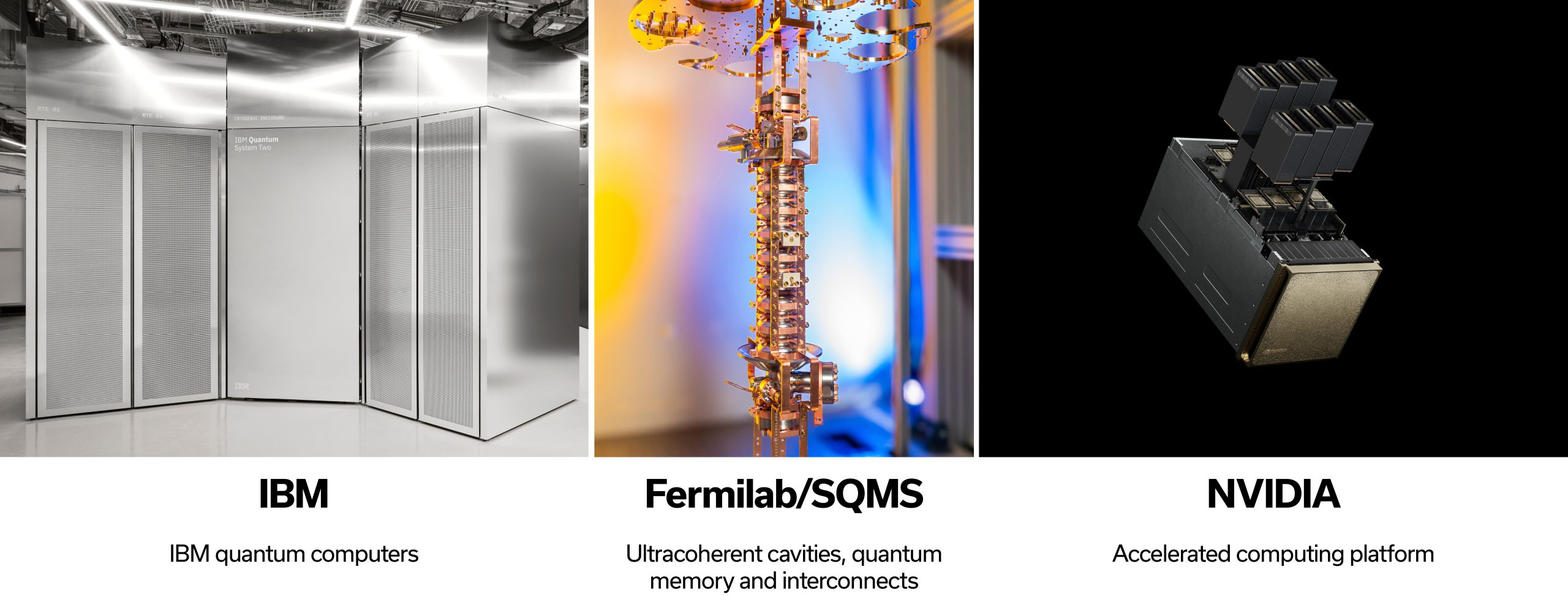
Nvidia said on 16 November that it is working with IBM and Fermi National Accelerator Laboratory on a quantum-classical codesign platform. Nvidia says DGX B200 systems will connect with IBM quantum computers, including those powered by IBM Quantum Nighthawk, which Nvidia calls the most powerful processor IBM has yet built. The same release also calls Nighthawk the fastest quantum processor IBM has delivered. Fermilab’s release, the same day, describes a proposed initial platform that would physically co-locate IBM quantum computers with Nvidia accelerated computing. Fermilab says its Superconducting Quantum Materials and Systems Center intends to add its own superconducting cavity hardware.
The decoder
Separately, Nvidia released TCBP-JOBS, a decoding algorithm in the CUDA-Q QEC 0.9.0 library. Nvidia says it delivers up to a 13,000-times speedup for quantum error-correction research, compared with existing leading algorithms, and that it cuts the computation time for researching new quantum computing designs from 12 weeks to 45 minutes. Those figures are Nvidia’s. The release does not name the algorithms used as the comparison, and it does not say the decoder is running on a fault-tolerant quantum computer.
Scheduling
Nvidia says it is expanding the open-source Slurm workload manager with a quantum interface, so a supercomputing centre can schedule a quantum processor alongside CPUs and GPUs. IBM is contributing through its Quantum Resource Management Interface. Nvidia’s release says many of the products and features described remain in various stages and will be offered when and if they are available.
More in Infrastructure