Robotics · 20 October 2026 · 6 min read
Dream Labs will rent a robot model for $3 an hour. The hard tasks still fail most of the time
The company came out of stealth with a $90 million seed round and a public API it says can drive two-armed robots it has not trained on. On its own tests, pick-and-place succeeded about 40 per cent of the time. Pouring succeeded about 10 per cent.
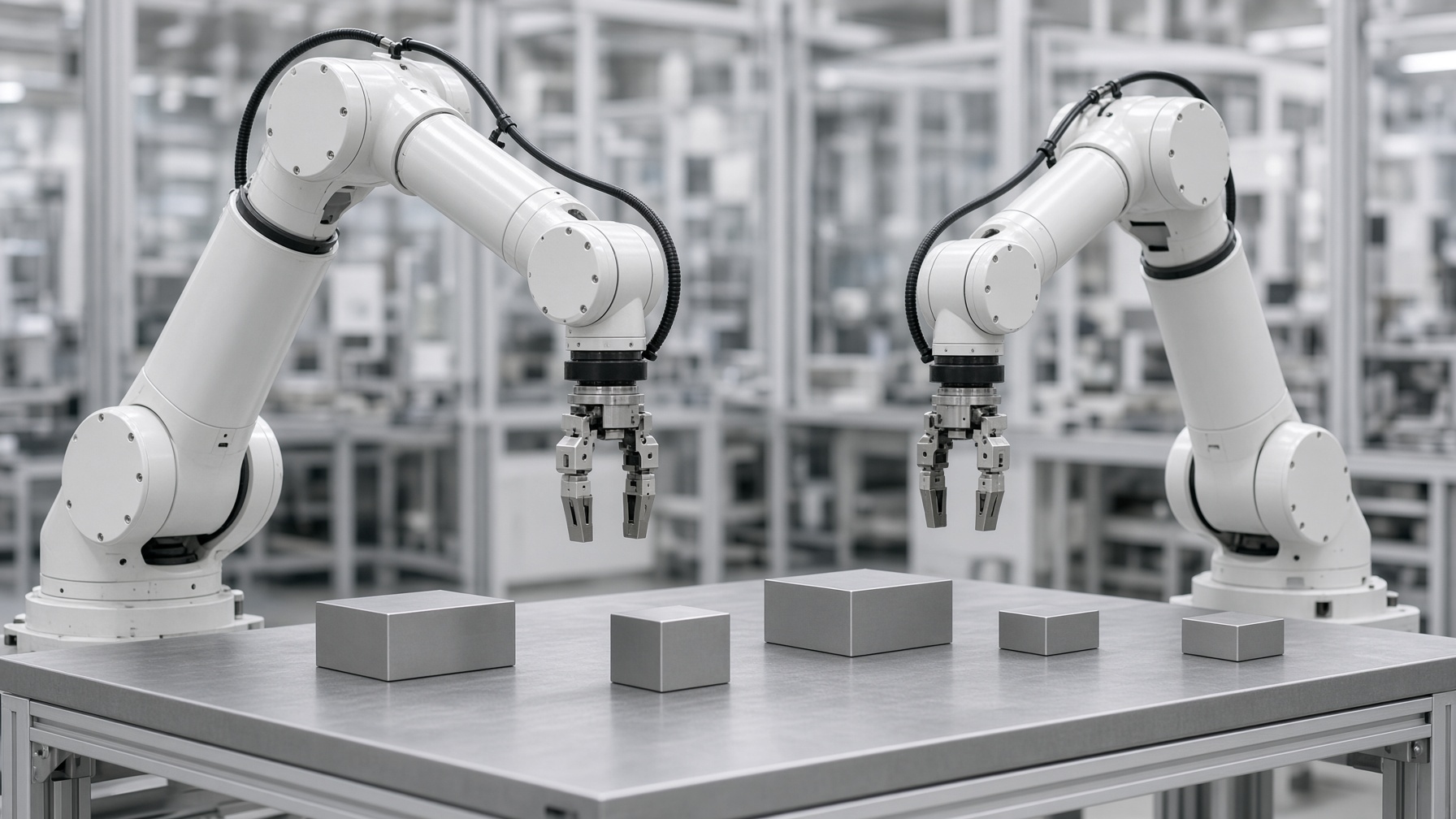
Dream Labs said it is out of stealth with a $90 million seed round and a public API for a model it calls Dream-1. The offer is a camera feed and a sentence in, motor commands out, at a price the research note puts from $3 an hour. The company says the model can run a two-armed robot with simple parallel grippers that it has not been shown before, on a task it has not been shown, without a fine-tune and without a machine-learning team. Forbes described the founders as former leaders of Nvidia’s robotics research, and quoted chief executive Joel Jang comparing a new robot to a rental car: the controls differ, the driving does not. The research note does not name the investors.
The limit is in the same note. Dream-1, today, is a manipulation policy for two arms and parallel grippers. It is not a hand with fingers, not a robot that walks, and not a mobile machine. Zero-shot performance, the company says, depends in part on the robot’s own solver for turning a hand position into joint angles, and it varies by body. A customer who wants the model closer to a particular machine can send a few minutes of data for a fine-tune. The company says that still beats the zero-shot result. “Out of the box” and “better after you collect data” are both in the post.
Forty per cent is not a shift
The scores are the company’s. On a chart of unseen tasks it reports success at 40 per cent for pick-and-place, give or take 6 points, across 60 rollouts; 10 per cent for pouring or scooping, give or take 4, across 52; and 6 per cent for tool use, give or take 3, across 54. A separate chart, marked as simulation, puts other robot bodies at between 91 per cent and 37 per cent of a reference robot. Those are its numbers, not an outside lab’s. Several of the clips are sped up, and several are a single rollout. A model that picks the right object four times in ten, on the company’s own bench, has not taken a station. It has published a number low enough to read.
An API a customer can call is still a different product from a waitlist. Physical Intelligence’s hosted robot API, filed on this desk last week, asks the customer to upload demonstrations first. Dream Labs is selling the opposite pitch: try the robot you already have, and pay by the hour. The pitch holds only for the bodies the note describes, and only at the rates the note measured. Until a named site publishes its own miss rate on a job it already had, $3 an hour is a price for a model, not a wage for a machine that finishes the work.