Robotics · 9 November 2026 · 3 min read
Boston Dynamics put wheels on Atlas. It says the machine is a test, not a product
On 9 November the company published a note by a controls engineer: the feet were swapped for wheels so a learned whole-body controller could be driven hard. The 360-degree jump followed a recording of a person, and worked on the first try. No speed and no success rate are in the note.
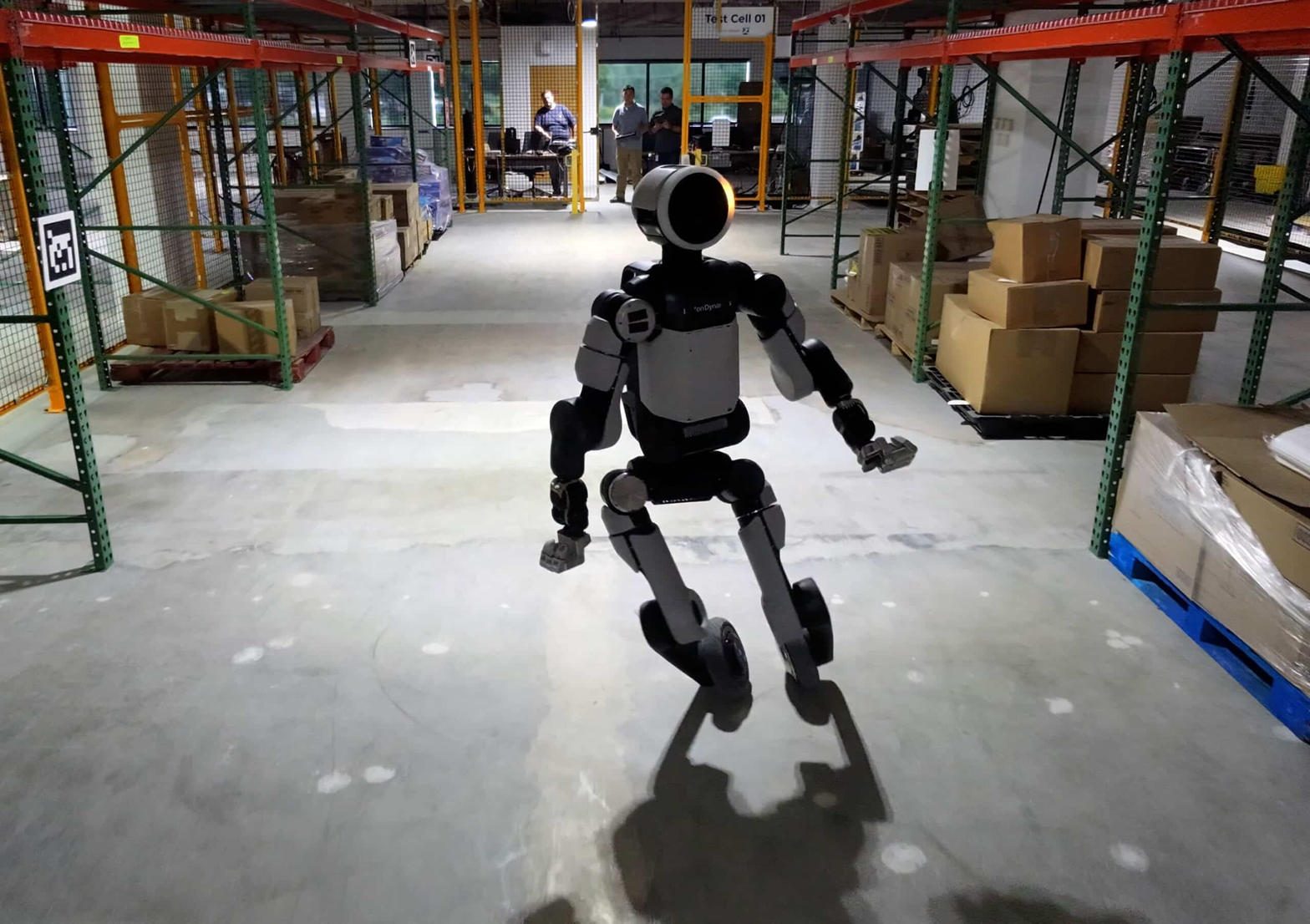
Boston Dynamics published on 9 November a note by Xiaoyu Wu, a controls engineer on the Atlas team. The company swapped the feet on an Atlas for wheels. The point, the note says, was a case where the motors had to deliver high torque and high speed continuously, under a real load, through launches, turns and stops. A learned whole-body controller, trained by reinforcement learning, drove it. Wu writes that a wheeled Atlas is not a product. It is a research testbed.
The move that looks hardest is the one the note marks down. The 360-degree jump, it says, was a trajectory-tracking policy following a recording of a person doing the jump, and it worked on the first try. A first try on a recorded path is not a controller inventing the jump, and it is not a count of attempts. The note gives no speed, no torque figure and no rate of success across a set of runs. A clip of a robot rolling is the demonstration. It is not a specification of the Atlas that Hyundai has been lining up suppliers for.