Robotics · 14 October 2026 · 6 min read
Boston Dynamics shows the Atlas shop. A day to build one is not a shipping rate
The company posted a six-minute film of machining, assembly and repair under one roof. A trade report of the film says a manager put a robot at about a day, and an hour as next year’s aim. The film does not say how many leave the building.
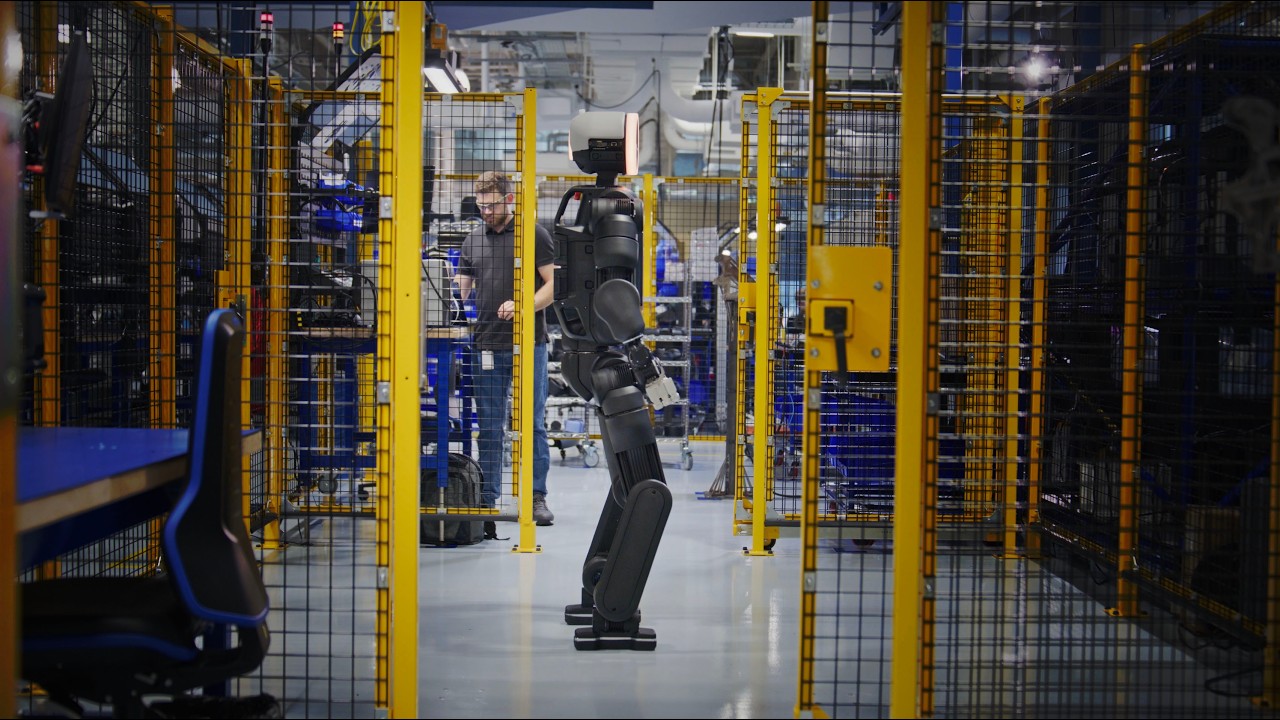
Boston Dynamics put a new film on its own channel on 14 October. It runs five minutes and fifty-six seconds and is called “Machine, Assemble, Repair: How We Build Atlas”. The description says the shop machines parts in-house and keeps assembly and repair under one roof, so a custom part can become walking hardware faster. That is a claim about the prototype floor, not about a customer.
The useful number is not in the description. Humanoids Daily, watching the film, reports that Katie Conner, a senior technical program manager, says building a robot now takes about a day. She is reported to set the next step at about an hour next year, and at minutes in later years, against a slower process a year ago. Staff are also reported to describe a floor laid out like a manufacturing line, meant to hold more than one or two experimental machines, with parts assembled the same day or the next and then seen moving on a humanoid upstairs.
A day is a build. It is not an output
A day per robot, if that is what the film says, is a cycle time inside a prototype shop. It is not a statement of how many Atlases ship in a week, what they cost, or who has signed for them. The film does not, on the company’s own description, give a shipment rate. An hour next year is an ambition stated to a camera. It becomes a result only when the same shop, or a later factory, publishes a count of finished machines and a date.
What the film does show is where the time went. Machining in the same building means an engineer can change a part without waiting on an outside supplier. Assembly and repair in the same building means a robot that fails a test does not leave the process. That is how a research machine starts to look like a product. It is also how a company can look busy on camera while the order book stays somewhere else. This desk has already filed the separate question of who is running the factory push. This film does not answer it.