Robotics · 31 October 2026 · 5 min read
North American companies ordered 10,989 robots in the third quarter. That is an order, not a machine on a floor
A3 said on 28 October that the orders were worth $723.5 million, up 24.8 percent in units and 26.1 percent in value on the year before. Nine months come to 28,984 robots and about $1.89 billion. Component makers ordered 90.4 percent more in the quarter. Food and consumer goods ordered fewer.
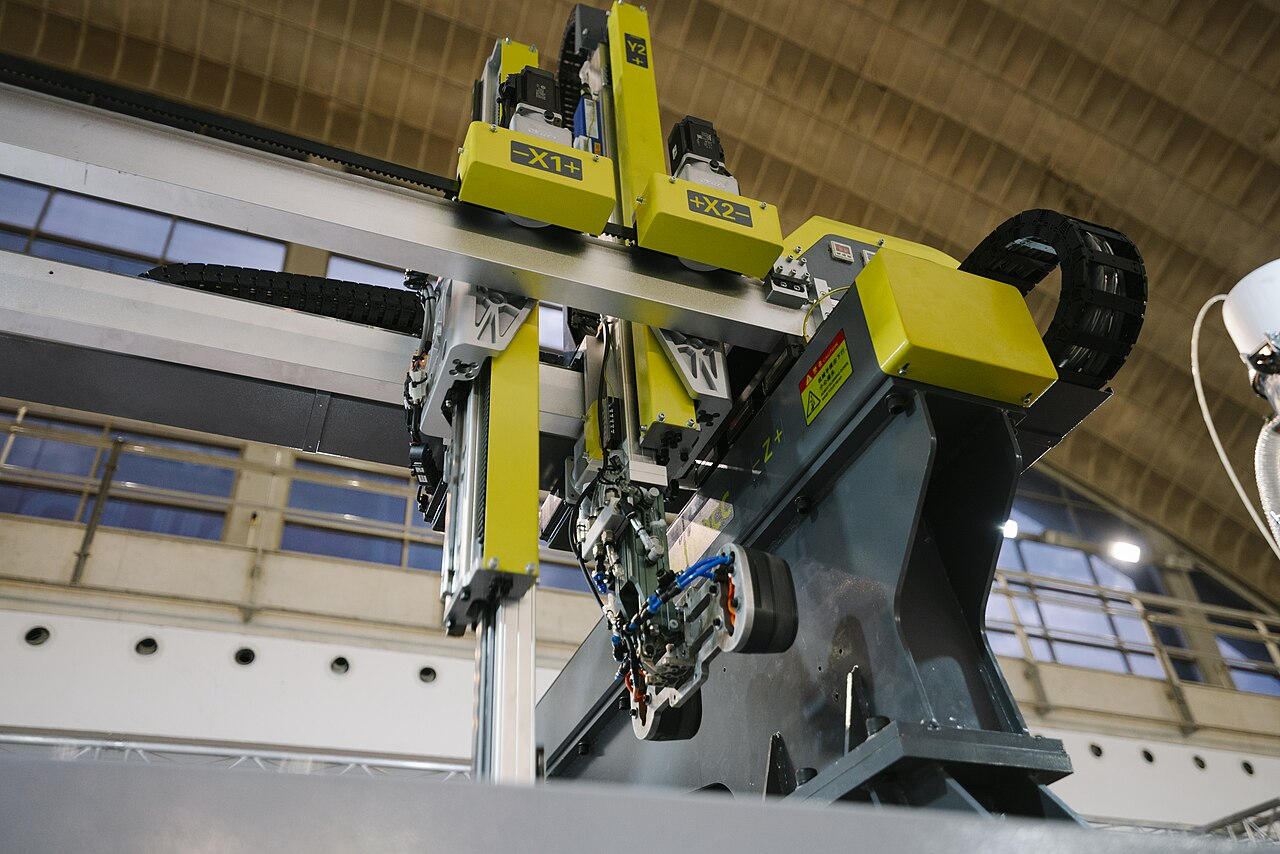
The Association for Advancing Automation said on 28 October that North American companies ordered 10,989 robots in the third quarter, valued at $723.5 million. Orders rose 24.8 percent in units and 26.1 percent in value against the third quarter of 2025. A3 called it the strongest quarter of the year so far. An order is a purchase that has been placed. It is not a robot that has been shipped, installed or switched on, and the release does not say how many of the 10,989 have arrived.
Nine months of orders come to 28,984 robots, valued at approximately $1.89 billion, up 9.6 percent in units and 13.3 percent in value on the same stretch of 2025. Car makers, the automotive original-equipment group, were up 7.5 percent in the quarter after falling in the first half, and were still 17 percent below their year-earlier level through September. Companies that make car parts ordered 90.4 percent more robots in the quarter. A rebound in one quarter does not erase a nine-month deficit, and a parts supplier is not the plant that builds the car.
The rest of the quarter was not one industry. In units, semiconductors, electronics and photonics were up 97.6 percent, plastics and rubber 67.7 percent, life sciences, pharmaceuticals and biomedical 38.7 percent, and metals 37.0 percent. All other industries were up 0.5 percent. Food and consumer goods were down 23.7 percent. Collaborative robots were 1,831 of the quarter’s units, worth $63.8 million, about 56 percent more units than a year earlier, and 16.7 percent of the robots ordered. Through September, A3 counts 4,605 collaborative robots, about $178 million, 15.9 percent of units and 9.4 percent of the value. Over those nine months they were 43.8 percent of life-sciences orders and 36.9 percent of semiconductor and electronics orders. That 36.9 percent is a nine-month share of one industry. It is not a share of the 10,989.
Alex Shikany, executive vice president, said what stood out was not only the size of the rise but “how broadly it was distributed across the market,” and that the wider mix “points to a robotics market that is becoming increasingly diversified across industries and applications.” The same release says higher input costs, trade uncertainty and the timing of large manufacturing projects remain factors to watch. It also cites a September purchasing index of 54.5 and a Federal Reserve figure of 0.3 percent more manufacturing output that month. Those are the wider economy A3 put next to the table. They are not a robot. A product claim for one cell, such as a Fashion Inductor, is not a line in this order book either.